
Booklets
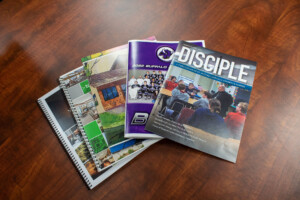
From saddle stitched to spiral-bound, booklets provide an organized and professional look to any business. IntegriPrint offers several solutions to help build your ideal booklet including the paper, printing and binding options.
Learn 3 ways to build your own branded booklet by reading our blog.

The answer depends on distribution and budget. While larger quantities generally reduce the cost per piece, digital printing now makes short runs of 25–250 booklets affordable for many organizations.
For events, trade shows, and sales presentations, it’s often wise to print slightly more than your immediate needs to avoid costly reprints.
The right paper depends on your goals and budget.
Common choices include:
Gloss Text Paper
- Vibrant colors
- Excellent for photos
- Popular for catalogs and marketing pieces
Matte Text Paper
- Sophisticated appearance
- Easier to write on
- Reduces glare
Heavy Cover Stock
- Used for front and back covers
- Adds durability and professionalism
Many businesses choose a heavier cover with lighter inside pages to balance quality and cost.
Popular booklet sizes include:
- 5.5″ x 8.5″
- 8.5″ x 11″
- 6″ x 9″
- 8″ x 8″ square
The most common size is 8.5″ x 11″ because it provides ample space for images, text, and graphics while remaining cost-effective to print.
Consider how your audience will use the booklet when selecting a size.
The most common booklet binding methods include:
Saddle Stitching
- Folded pages stapled along the spine
- Cost-effective
- Great for smaller page counts
Perfect Binding
- Pages glued to a spine
- Professional “book” appearance
- Ideal for thicker catalogs and manuals
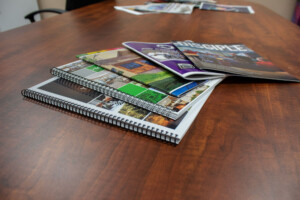
Spiral or Coil Binding
- Pages turn easily and lay flat
- Popular for training materials and reference guides
Choosing the right binding depends on the booklet’s purpose and how frequently it will be used.
Most saddle-stitched booklets are produced in page counts that are multiples of four, such as:
- 8 pages
- 12 pages
- 16 pages
- 20 pages
- 24 pages
- 32 pages
Larger booklets may use perfect binding (similar to a paperback book) instead of staples.
The ideal page count depends on your content, budget, and intended use.
A brochure is typically a single sheet of paper that is folded into panels, while a booklet consists of multiple pages that are bound together.
Booklets are ideal when you need more space for:
- Product catalogs
- Company profiles
- Annual reports
- Event programs
- Training manuals
- Instruction guides
If your information won’t comfortably fit on a tri-fold brochure, a booklet is usually the better option.