
Business Forms
Upgrade your business’s image with designs for purchase orders, invoices, business forms and other carbonless forms. Look no further than right here. Creating business forms can be a tedious process—we’re here to make it simple.
Send your business form(s) in customized business envelopes. We’ll do all the work for you.
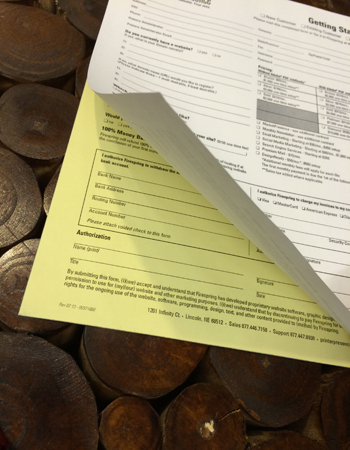

There are many types of business forms depending on your industry, including:
- Invoices and statements
- Work orders and service tickets
- Purchase orders
- Delivery forms and receipts
- Contracts and agreements
- Carbonless (NCR) multi-part forms
- Employee records and HR forms
Most forms are customized to match specific business processes, branding, and compliance needs.
Carbonless forms—often called NCR (No Carbon Required) forms—create duplicate or triplicate copies without using carbon paper.
They work using micro-encapsulated dye that transfers writing from the top sheet to the sheets below when pressure is applied.
Common sets include:
- 2-part (original + copy)
- 3-part (original + 2 copies)
- 4-part sets for more detailed workflows
They’re widely used for invoices, work orders, and delivery confirmations.
Yes.
Business forms can be fully customized with:
- Company logo
- Business name and contact information
- Custom fields and layout
- Terms and conditions
- Sequential numbering
- Barcodes or QR codes
Custom branding helps reinforce professionalism and makes documentation easier to track and organize.
Common options include:
- Carbonless paper (NCR sets) – For multi-copy forms
- Bond paper – Standard single-sheet forms
- Colored paper options – For organizing different form types
- Tag or heavier stock – For durable applications like tickets or tags
The best choice depends on whether you need single-use, multi-copy, or long-lasting forms.
Yes—especially in field-based and service industries.
Printed forms are still widely used in:
- Construction and contracting
- HVAC and plumbing services
- Delivery and logistics
- Manufacturing
- Healthcare intake processes
- On-site inspections
They’re valuable when:
- Internet access is limited
- Quick documentation is needed
- Physical signatures are required
- Standardized workflows reduce errors
Many businesses now use a hybrid approach: printed forms in the field and digital systems for back-office processing.
Well-designed business forms reduce confusion and save time by:
- Standardizing data collection
- Reducing missed information
- Speeding up billing and approvals
- Improving record accuracy
- Supporting compliance requirements
A properly structured form can significantly reduce administrative overhead and improve workflow consistency.